







Between Dreams: Resistance and Representation in Asian Aotearoa
This landmark collection presents fresh, progressive perspectives on what it means to be ‘Asian’ in Aotearoa.
Free museum entry for New Zealanders and people living in New Zealand
Open every day 10am-6pm
(except Christmas Day)
Free museum entry for New Zealanders and people living in New Zealand
Grace Gassin discusses Between Dreams with Te Papa Press.
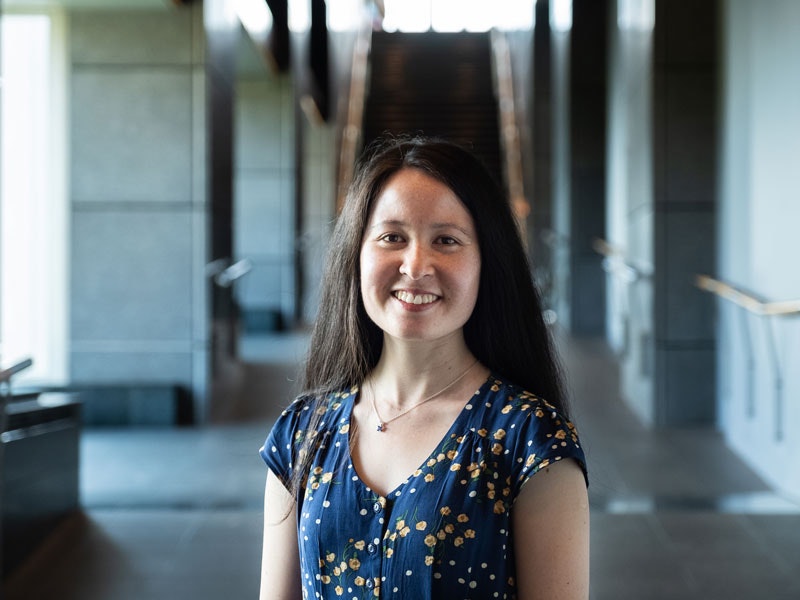
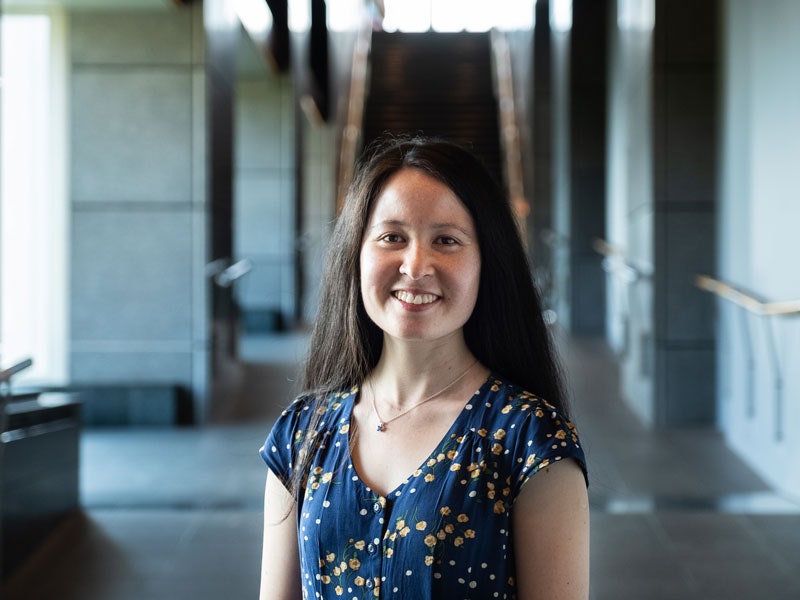
Dr Grace Gassin (林素真) is Curator Asian New Zealand Histories at Te Papa. Raised in her mother’s Malaysian Chinese family, Grace proudly identifies as a second-generation Chinese (Hokkien) New Zealander of mixed heritage. Grace’s overarching focus is on highlighting the diverse historical and contemporary experiences of New Zealand’s many Asian diaspora communities. Her wide-ranging interests also encompass the politics of inclusion and interpretation that frame our understandings of Asian diaspora histories, and transnational dimensions of Asian Australasian diaspora experiences. She is also a committed delegate for E tū union
During the public submission period for the Aotearoa New Zealand’s histories curriculum, I felt called to action as one of the few people of Asian heritage working in public history. I brought a few of us together to prepare a joint submission at the time. I will always remember that as a unique and special moment where those of us present were able to come together and freely discuss: if we had free rein, how would we be able to shape the Asian New Zealand histories our next generation would learn about? I recorded our conversations, which ultimately found an outlet in our joint submission to the Ministry. Years later, that submission would become a kind of early guiding document as we brainstormed and brought together the contributors for this book.
It was a very organic process! A couple of years after the joint submission mentioned above, my colleagues at Te Papa Press presented me with an opportunity to produce a publication with them. I immediately thought back to those conversations from years earlier and got back in touch with that original submission group. I admit I was a little nervous – given the time that had passed, would any of them still be interested in picking up that kōrero with me? It’s one thing to have a conversation, quite another to collaborate on a years-long book project! Fortunately, most were very keen to collaborate. We all live in different parts of Aotearoa and the world, so we started off with some zoom chats, which evolved into collective brainstorms using Miro post-it boards online where we collectively came up with a range of specific topics we thought would be important to include.
From there, we reached out to our networks, specifically individuals we knew would have something powerful to say, who could write, held valuable knowledge, and who were passionate about the overall vision proposed for the book. As it turns out, between us, we know a lot of really cool people.
One theme that I think comes across quite clearly in the book is that colonisation in Aotearoa New Zealand did not happen in a vacuum – New Zealand is one settler colonial nation among many. Asian peoples and places are no strangers to colonialism and we appear in global histories as colonisers, colonised peoples and ‘middlemen’. These histories are, inevitably, difficult to explore, but to understand the contours of contemporary New Zealand, exposure to these broader contexts are vital, especially for young Asian New Zealanders who are still trying to work out their place here and in the wider world.
While New Zealand museums are becoming better at addressing colonialism in relation to Māori and Pacific histories, histories connecting us with Asia and relating to people with whakapapa linking them to the region are still engaged with in very colonial ways. These include uncritically partnering with problematic institutions and groups focused on Asia that pay lip service to diversity and equality while actively promoting the spread of oppressive discourses, and developing ‘multicultural’ collections that encourage colonial understandings of concepts like ‘Chinese’ or ‘Indian’ as singular and unchanging. As museums, we are only relevant if we are serving our communities in ways that matter and are beneficial to them. To do that, we need to do a much better job of identifying where we are upholding and perpetuating colonial ways of working and thinking, and actively resist that.
The cover design is inspired by the famous post it-covered ‘Lennon Walls’ which sprung up during the Hong Kong protests of 2019–20. These colourful notes carried powerful slogans and handwritten messages of support for the Hong Kong protest movement.
The original Lennon wall, started decades earlier in Prague following the assassination of John Lennon, was inspired by the singer/songwriter’s symbolic representation of freedom and political struggle. In Hong Kong, the first Lennon wall appeared the 2014 Umbrella Movement – Lennon’s song, Imagine, which includes the famous line ‘You may say I’m a dreamer/But I’m not the only one’ was adopted and sung by the crowd and a lyric hung on a banner near the Wall.
Lennon Walls bring to mind generations of ‘dreamers’, artists and activists who have resisted their oppressors across time and place. We also now have several Lennon-Wall inspired taonga in Te Papa’s collection linking the Hong Kong protests and Aotearoa. A Lennon Wall-inspired cover felt very fitting for a book on resistance and representation in Asian Aotearoa named Between Dreams.
This is the kind of question I often get asked but find so hard to answer! Each taonga in our collections has a unique and powerful story. Right now, my gut is telling me to shine a light on the attus and kaparamip textiles donated in 2024 by the late, unforgettable Ainu elder and artist Akemi Shimada. These were gifted by Akemi in a special pōwhiri and during her last-ever visit to Aotearoa – in express acknowledgement of her friendship with Māori across Aotearoa and Japan, many of whom played a major role in her own journey towards embracing her identity as an Indigenous woman.
How limiting the framework of multiculturalism is for Asian Aotearoa (and other ‘Aotearoas’ out there). Multiculturalism sounds progressive in theory – celebrating many cultures is better than celebrating just one or two, right? In practice though, multiculturalism often allows one or two powerful cultural ‘leaders’ to lay claim to being the ‘real’ and ‘authentic’ representative of a particular community . . . sometimes at the deliberate expense of more marginalised members of that population.
During the pandemic there was a lot of racism and harassment directed towards people of Chinese (and East Asian) appearance living in Aotearoa. I was in the somewhat unique position of experiencing this side of the pandemic myself as a private individual of Malaysian Chinese heritage and as a professional documenting the pandemic specifically from the perspective of Asian communities.
During that period, I did in-depth interviews with around eighteen people of Chinese heritage, co-facilitated several workshops with various Asian and international student communities, and documented and collected items to represent these experiences. The work I did in that period resulted in new taonga coming into our history collections, the creation of a comic zine based on the interviews I conducted called The Pandemic Chronicles, and inspiration for other projects I have helped shape in the years since.
Several of the taonga I collected in this time appear in Between Dreams, including two rather unique T-shirts bearing the seemingly contradictory messages ‘I am from Wuhan’ and ‘I’m not from Wuhan, Drop the Pitchfork’. In Between Dreams you can find out more about these two textiles, but suffice to say that their creators, both of Chinese ancestry, experience the pandemic in very different ways. Placed side by side, they appear to speak to each other, as taonga often have a way of doing in museums. They were, however, created in completely independent scenarios, and their makers have never met one another. For me, they are a clear and powerful testament to the fact that ‘Chinese’ experiences of the pandemic in Aotearoa were profoundly diverse and personal.
Well, in the short term, my focus will be elsewhere . . . on the baby in my belly set to arrive in a few short weeks! My perspective on life will undoubtedly be transformed by my little girl, so my answers could look very different in a few months’ time.
I would like to continue to build on what we’ve created with Between Dreams and open up more opportunities to tell a greater range of stories about Asian Aotearoa communities: to highlight the many contemporary stories and longstanding histories of Māori and Pacific-Asian connections, celebrate Asian Aotearoa activism and challenge common assumptions about what labels like ‘Chinese’, ‘Indian’, ‘Asian’, ‘New Zealander’ mean in the context of New Zealand.
It’s true that one book can’t represent all Asian diaspora experiences in Aotearoa – but neither can two or three or four such books! For that reason, I’m not too hung up on what has or hasn’t been included or what a second edition would look like right now. Though I would love a second volume!
I do try to pay attention to contemporary issues affecting our communities and think about how our constructions of the past evolve in relation to those developments. A second volume might delve further into issues introduced in Between Dreams such as the increasing use of (often Asian and Pacific) short-term migrant labour, or the experiences of faith-based communities. I know we’ll be able to feature some more amazing writers and researchers – our communities are filled with talent – and develop our ability to highlight taonga from some of our smaller but rapidly growing Asian New Zealand communities in rural areas.
I hope Between Dreams will help to encourage and inspire readers to take a generous and expansive view of what Asian New Zealand histories and contemporary stories can look like – to seek out histories that go beyond the now well-worn narratives of the ‘grateful migrant’ or ‘successful entrepreneur’. Asians in Aotearoa are also the heirs to powerful histories of activism, art, workers’ rights and much, much more. Basically, I would like our readers to take away with them permission to dream bigger.
This landmark collection presents fresh, progressive perspectives on what it means to be ‘Asian’ in Aotearoa.
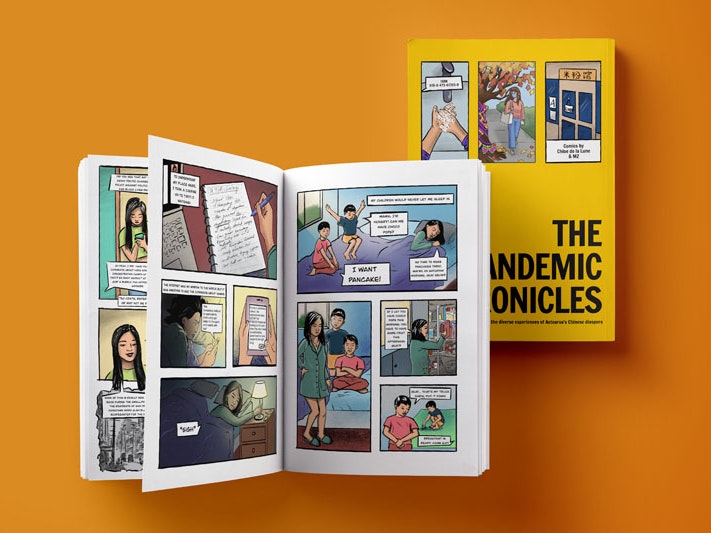
These comics offer a glimpse into the experiences of people of ethnic Chinese background who lived through the Covid-19 pandemic in Aotearoa New Zealand.