







Phar Lap on Collections Online
Along with Phar Lap's skeleton, Te Papa also holds some photographs, stamps, and other information about this great horse.
Free museum entry for New Zealanders and people living in New Zealand
Open every day 10am-6pm
(except Christmas Day)
Free museum entry for New Zealanders and people living in New Zealand
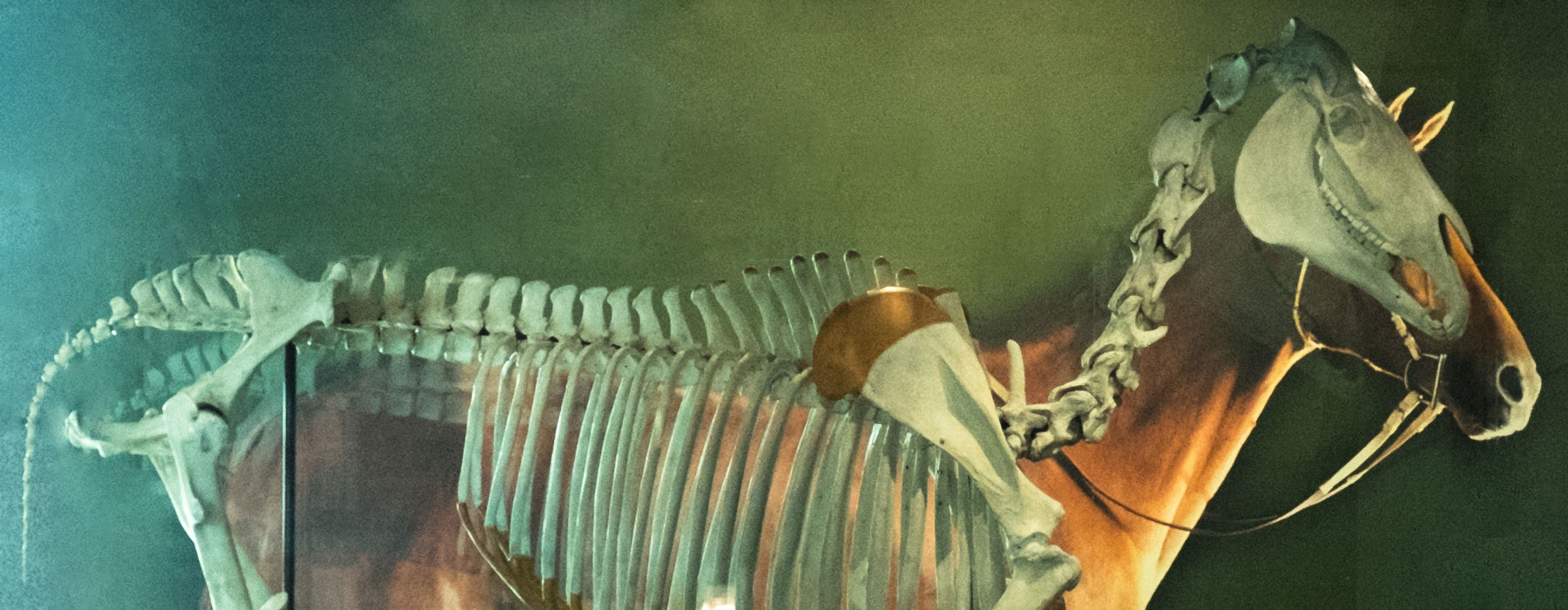
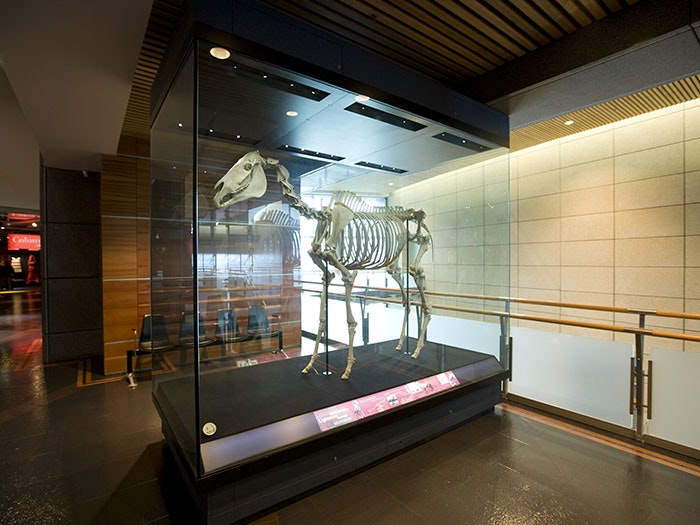
Phar Lap was a legendary racehorse and an adored animal hero for a generation of people in New Zealand. You can pay your respects to his bones here, in the country he was born.
Permanent exhibition
Level 4, near stairs
Free with museum entry
All ages
5 minutes
Wheelchair accessible
Phar Lap started life on a stud farm near Tīmaru in 1926. His breeder sent him to the Trentham yearling sales in early 1928. Harry Telford, a New Zealand horse trainer in Sydney, spotted Phar Lap in the sale catalogue, and liked the look of his pedigree. He didn't have any money to buy the horse, so he got David J Davis, an American living in Sydney, to put up the purchase price – 160 guineas.
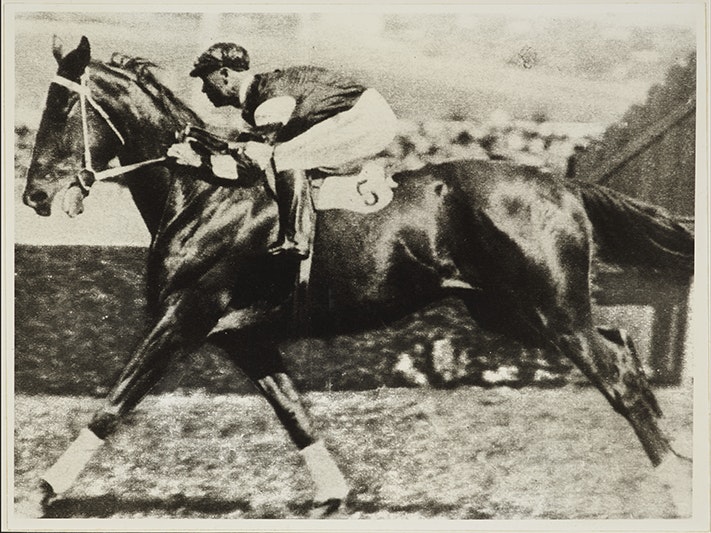
In the autumn of 1930 started his legendary string of successes – he won thirty-three of the remaining thirty-five races in his career.
Horse, Equus caballus, collected 05 Apr 1932, Menlo Park, California, United States of America. Gift of DJ Davis and HR Telford, 1932. CC BY-NC-ND licence. Te Papa (LM000760)
The punters loved Phar Lap, and he invariably started as odds-on favourite. Others were not so keen – someone, possibly a bookmaker, tried to shoot him as he returned from track work one morning in November 1930. He went on to win the Melbourne Stakes that day and the Melbourne Cup, easily, three days later.
The distribution of his remains reflects the claims on him by both Australia and New Zealand. His heart and his hide went to Australia. The heart, at 6.3 kilograms extraordinarily large by horse standards, is in a bottle in Canberra. The hide is mounted on a model of Phar Lap in Melbourne Museum. His bones came back to New Zealand, and are with us here at Te Papa.
Melbourne Museum’s Phar Lap exhibition page
National Museum of Australia’s Phar Lap collection online
Along with Phar Lap's skeleton, Te Papa also holds some photographs, stamps, and other information about this great horse.
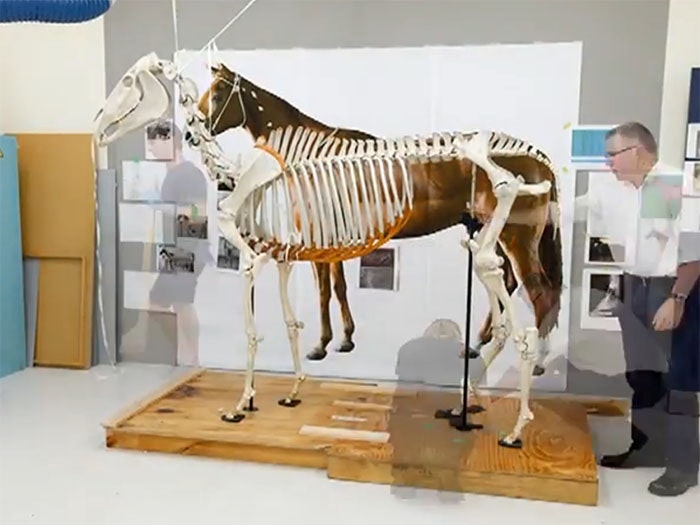
A time-lapse video showing the reconstruction of racehorse Phar Lap’s skeleton. A life-sized photograph of the hide from Melbourne Museum was used as a guide.
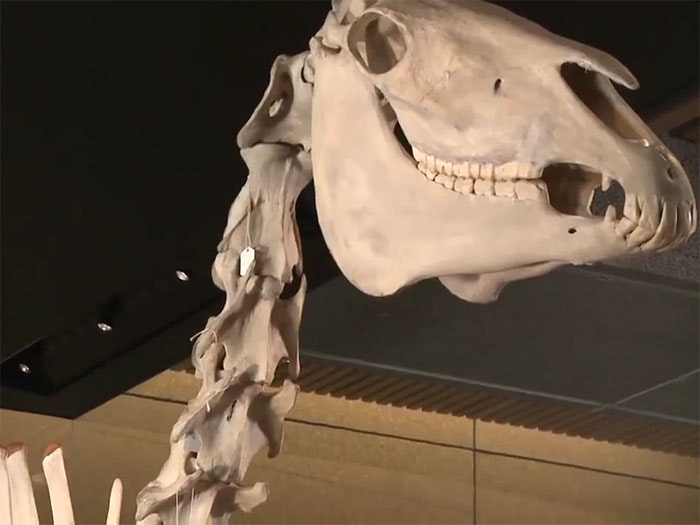
In June 2010, Te Papa lent the skeleton of iconic racehorse Phar Lap to Melbourne Museum for an exhibition. Te Papa conservator Robert Clendon describes the conservation work undertaken to ready the skeleton for its trip across the ditch, and historian Michael Fitzgerald explains why this racehorse is so special to Australians and New Zealanders alike.
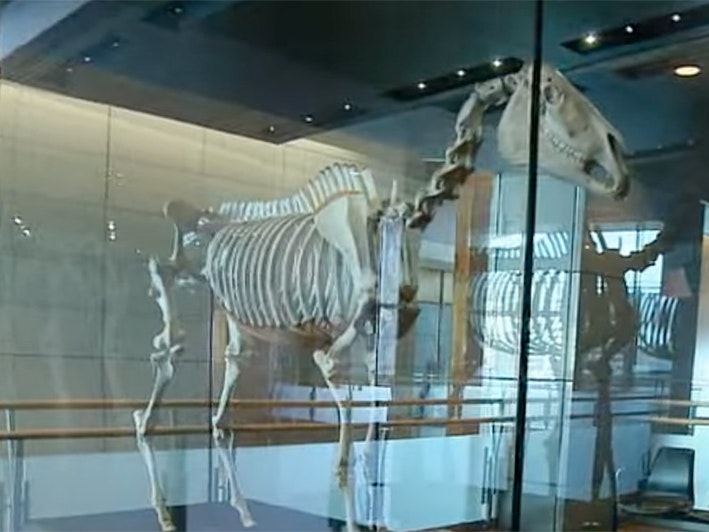
In the 1930s a New Zealand horse became a racing legend in Australia. Since then we've been sharing his success, and what remains of his body. Simon meets Phar Lap's skeleton. Tales from Te Papa is commissioned by TVNZ 7, in partnership with Te Papa.
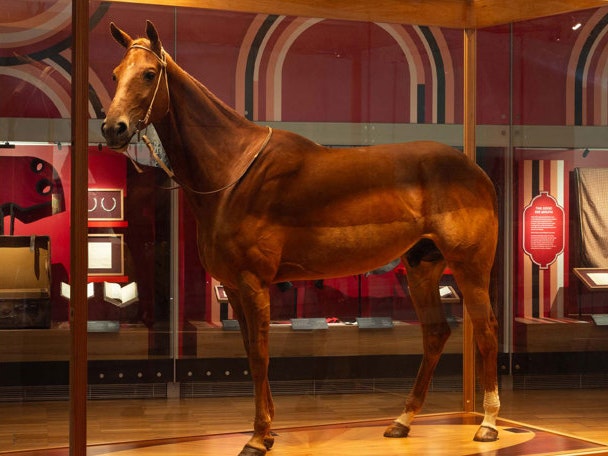
Phar Lap ran 41 races and won 36 of them and while Te Papa holds the horse’s skeleton, Melbourne Museum has Phar Lap's hide on display.
This link will take you to the Phar Lap page on Melbourne Museum’s website.
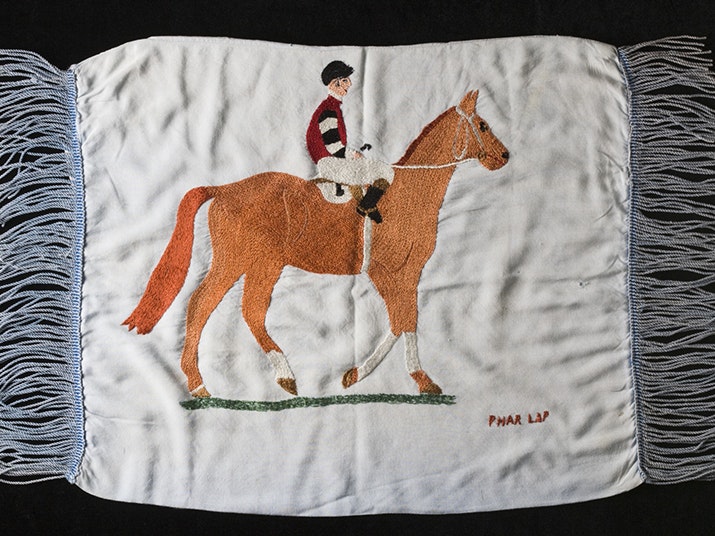
Phar Lap ran 41 races and won 36 of them and while Te Papa holds the horse’s skeleton, the National Museum of Australia has Phar Lap's heart on display.
This link will take you to the Phar Lap page on National Museum of Australia’s website.
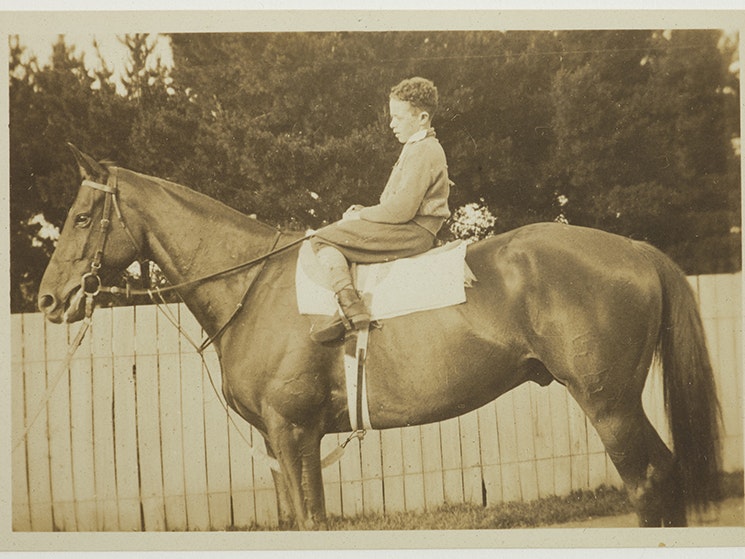
In October 1938, Edwin Herbert Gibson, taxidermist at the Otago Museum, travelled from Dunedin to Wellington to oversee the preparation of the skeleton of the famous racehorse Phar Lap for exhibition at the Dominion Museum. This paper looks at Gibson’s career, and how it prepared him for the invitation to participate in this significant enterprise.