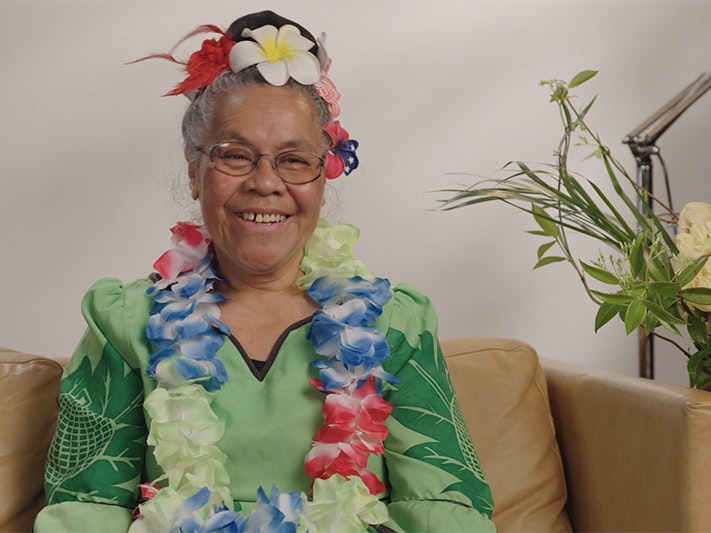
Watch Phylesha Brown-Acton
Please note: Select Tongan for Niuean subtitles on this YouTube video
Transcript
Meet Phylesha
Phylesha Brown-Acton, MNZM hails from the village of Fineone Hakupu Atua, Niue Island. She identifies as Fakafifine. Phylesha has rooted her work in advancing the voice, visibility, and rights of MVPFAFF+ / Pacific LGBTQI+ people and their families for over 25 years.
Phylesha is a weaver, dancer, storyteller, and life navigator.
Phylesha today remains just as committed alongside many others who continue their collective activism, work, and solidarity across many platforms to advance the human rights of those she serves. Phylesha coined the mnemonic MVPFAFF+ / Māhū – Hawaiʻi, Vakasalewalewa – Fiji, Palopa – Papua New Guinea, Fa’afafine / Fa’atama – American Sāmoa & Sāmoa, Akava’ine – Cook Islands, Fakafifine – Niue, Fakaleiti or Leiti – Tonga, which recognises terms that are far more expansive in understanding of gender and sexuality through knowledge systems that see and recognise people beyond the restraints and nuances of Western ideologies of gender binary and sexuality concepts.