







Slow Burn: Women and Photography | Ahi Tāmau: Mareikura Whakaahua – Exhibition Catalogue
Slow Burn Ahi Tāmau showcases the diverse range of photography by women and non-binary artists from Aotearoa New Zealand, spanning the 1960s to today.
Free museum entry for New Zealanders and people living in New Zealand
Open every day 10am-6pm
(except Christmas Day)
Free museum entry for New Zealanders and people living in New Zealand
Lissa Mitchell discusses Slow Burn Ahi Tāmau with Te Papa Press.
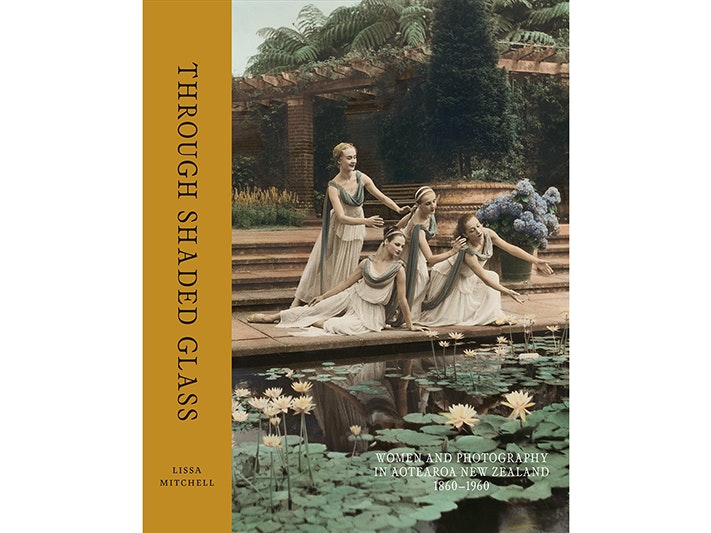
Lissa Mitchell is curator of historical photography at the Museum of New Zealand Te Papa Tongarewa and a graduate of the art history programme at Te Herenga Waka –Victoria University of Wellington. They are the author of the 2023 book Through Shaded Glass: Women and photography in Aotearoa New Zealand 1860–1960 (Te Papa Press), and a co-author of the text for Thread Between Darkness & Light (Rim Books, 2024). They have contributed to several other books: Flora: Celebrating our Botanical World (Te Papa Press, 2023), An Alternative History of Photography (Prestel, 2022), New Zealand Art at Te Papa (Te Papa Press, 2018), Brian Brake: Lens on the world (Te Papa Press, 2010) and The Aotearoa Digital Arts Reader (Clouds, 2008).
After the publication of Through Shaded Glass, I was moved by the number of women photographers who contacted me to say how meaningful it was to read the book and discover the long and involved history of women working within all areas of photography in Aotearoa New Zealand. Through Shaded Glass is a starting point, a way of stimulating further research and photography and broadening the view of the kind of photography made here and the people who made it.
Slow Burn Ahi Tāmau picks up that challenge by focusing on what Te Papa holds, actively building those collections and filling the gaps in the representation of historical and contemporary legacies of women photographers. The catalogue essay is the key to unlocking those connections. The aim was to be more inclusive than the usual approach of selecting a small number of artists and holding them up as exceptions – my approach attempts to endorse diversity and historical legacies both within the museum and outside it. Through Shaded Glass is a mark in the sand and has seeded many conversations and helped to bring to light more work by women photographers. Slow Burn explores both the existing collection holdings as well as photography acquired into the collection since 2023 – both historical and contemporary work.
The title resonates in many ways – from photographic darkroom practises to popular music – I love Mel Parsons’ song ‘Slow Burn’, and Boh Runga’s band Stellar* also has a song, ‘Slowburn’. But the strongest connection for me is the way it relates to the slow gathering of knowledge and material objects (in this case photography) that at a certain point becomes a moment of certainty – it kind of sneaks up on you. The burn is the sting in the tail of realising how systemically ignored whole aspects of our histories are. Slow Burn is the outcome of that slow building moment – it’s about the undeniable involvement and contribution of women to photography and the need to acknowledge and discuss the creativity and innovation of their work and the stories behind it. The best way to do that is through exhibitions and publications and the events that result from them such as the Slow Burn exhibition opening weekend symposium at Te Papa on women and photography (Saturday 28 February).
It is such a cool and powerful photograph that feels contemporary, which is interesting to think about – how work from the past could still resonate in the present by bringing a certain sense of style and values, disrupting my stereotyped notion of the 1980s! In this way it speaks to the idea of slow dawning and arrival at specific moments that I set out to explore through Slow Burn, by opening the filter [bad pun!] and including over 50 photographers and artists and over 170 works across a range of time periods but firmly focused on 1960 up to the present. This was about enabling wider engagement by introducing audiences to a range of photographic work and, for the makers, exposing their work to new audiences – this is one of Te Papa’s superpowers!
Slow Burn has given me the opportunity to stretch my curatorial wings. It has been a privilege to work with contemporary photographers and artists and present their work and to showcase the incredible photographic work across Te Papa’s collections. One of the sections – Ancestor Technologies – focuses on materialising deep time: there is work by Natalie Robertson (Ngāti Porou, Clann Dhonnchaidh), Conor Clarke (Ngāi Tahu), Cora-Allan Lafaiki Twiss (Ngāpuhi, Ngāti Tumutumu, Niue – Liku, Alofi), Ann Shelton, Caroline McQuarrie, Samantha Matthews, Abhi Chinniah, Annemarie Hope- Cross, Ans Westra, Stella Brennan, Selina Ershadi, as well as a selection of photobook page spreads. As you can tell by this list, there are a lot of makers with very diverse approaches to photography and art, yet all of their work is motivated by a deep interest in different forms of histories resonating in material ways – whether that concerns the sovereignty of our waterways, migration and extraction, or the recovery of medical plant knowledge.
Pages from Slow Burn featuring work by Cora-Allan Lafaiki Twiss (Ngāpuhi, Ngāti Tumutumu, Niue – Liku, Alofi).
‘Mauri’ series, Cora-Allan Lafaiki Twiss, 2023.
Cyanotypes and whenua pigments on hiapo (Niue tapa), dimensions variable.
Purchased 2025. Te Papa (2025-0003-1–12).
I started with the photographs themselves. Curating really is a long-sustained process of looking, researching, discussing, thinking, writing and rewriting. These processes can circle around as connections form across time and place, and I like to tease these out to see if any stand up to deeper engagement. These can be little things like the photographic practise of two nurses – Sister Alice Keith and Sara McIntyre – separated by 100 years yet connected by how they each approached photography. But really the central aspect of my curatorial process was interrogating my own position as the curator – this is something I feel strongly about. It was important for me to explore the motivations behind my initial preferences and selections. Despite my ambitions of diversity and inclusion there are limits – not everyone can be included – there is so much amazing work being made. Slow Burn is another mark in the sand – one that I hope inspires further exhibiting and collecting as well as developing new audiences for photography.
Some people might ask: why do we need a women only exhibition? Through Shaded Glass and Slow Burn exist to show how binary and gender biased the art and photography worlds – and the collecting and preservation of artists legacies – have been (still are?). I don’t think there is anything to fear – to move on we need to start discussions. I aspire to be part of creating more non-binary photographic and art histories in Aotearoa New Zealand. Slow Burn isn’t about entrenching gender binaries; it’s focus is on makers who are offering new ways of working and much of this work does – it seems to me – come from a place within communities of people, thought and creation. Of course, there are men working in this way too and I’m delighted that they are pleased to be included. I consider myself non-binary – I have no interest in entrenching gender differences and exclusion.
My research over both Through Shaded Glass and Slow Burn has shown that women and non-binary artists have really been, and still are, involved in every aspect and mode of photography. As soon as I think I can make a generalisation, someone pops up and disrupts that tidy categorisation. That’s a good thing. As an art historian, I was trained to ignore these outliers, but now I think it is important to think about them and include them in my conclusions. But I do see certain types of approaches clustering around ideas – at least that’s how it appears in retrospect – such as photographers making use of the Polaroid SX-70 format during the 1970s and 1980s to make diaristic work within domestic contexts – for example Janet Bayly and Dinah Bradley. The use of this unique and instant process returns in the 2010s with Instax prints used by photographers such as Edith Amituanai, who incorporates the process within her style of working – see her series Julie Public (2016–2021). The use of colour photography in general – across all processes – has been popular with women. But, you know, there are always exceptions, and Slow Burn features a selection of black and white photographs from the 1980s and 1990s, which you could argue shows women are just as likely to turn to the mainstay format of twentieth century photography (the fibre-based black and white gelatin silver print) as anyone else – even for thoughtful and introspective work.
Pages from Slow Burn featuring work by Edith Amituanai.
Julie Public, Edith Amituanai, 2016–21.
Dye diffusion transfer prints, a selection from 100 Instax mini prints, 86 mm x 54 x 2 mm.
Purchased 2022. Te Papa (O.050882/1-100).
There are the key ones that organise and structure the exhibition and catalogue – play, performativity, materiality, and intimacy – these speak to the ways the works are ‘in conversation’ with each other within the individual galleries and wall hanging arrangements. But across the whole exhibition and catalogue there is a strong sense of connection – between artists and the materials they use – across time. This resonates in works that represent changing ideas and responses to issues over time such as feminism, land use, relationships and visual experience. Creativity can be empowering and a way to make sense of thoughts and feelings and share them with others. I am deeply moved by many of the works and how they speak to the experiences and interests of the makers. For example, the two moving image works are both made by groups of family members: for Last Skye Boat Song (2023), Johanna Mechen worked with her partner and children; and for Amator (2019), Selina Ershadi’s mother Azita Chegini shot most of the footage. I’m really interested in the way so many contemporary artists and photographers are working with photography to create work that broadens the view of who the ‘artist’ figure is. Their approach decentres the singular notion of the artist genius stereotype and directs the discussion towards ideas of co-creation and notions of the artist as part of communities of creation.
Pages from Slow Burn featuring work by Selina Ershadi and Azita Chegini.
Amator, Selina Ershadi and Azita Chegini, 2019.
Digital images from 35-minute moving-image artwork. Single channel video with voice-over.
Purchased 2023. Te Papa (2023-0006-1).
Everything! This has been a great learning curve for me. I am amazed at their hope and belief in the need for art and culture and the role it can play in all our lives and societies. They give me hope when I am consumed with dark thoughts about the state of our world and the injustices taking place for the sake of capital gains.
Part of my early research concerned revisiting the National Art Gallery’s 1982 contemporary photography exhibition View/Exposures, curated by Luit Bieringa and Peter Ireland, who were both deeply committed to photography as an art form and have done so much to collect, exhibit and promote photography here. Despite it touring nationwide, I didn’t see the exhibition, as I was a child growing up in the deep south at the time. But I have the exhibition catalogue, which has enabled the work and Luit and Peter’s vision to be experienced into the future, and it has left its mark on me. Like the Views/Exposures exhibition catalogue, the Slow Burn catalogue offers the opportunity to see reproductions of all the photography in the exhibition and to go a bit deeper with the essay, which focuses in on a selection of the work included. Exhibition catalogues are amazing devices for time travel!
Slow Burn Ahi Tāmau showcases the diverse range of photography by women and non-binary artists from Aotearoa New Zealand, spanning the 1960s to today.

Slow Burn showcases the diversity of photography by women and non-binary artists in Aotearoa New Zealand from the 1960s to today.
On now
Feb 2026 to Jan 2027
Exhibition Ngā whakaaturanga
Shining the light on New Zealand’s women photographers.