







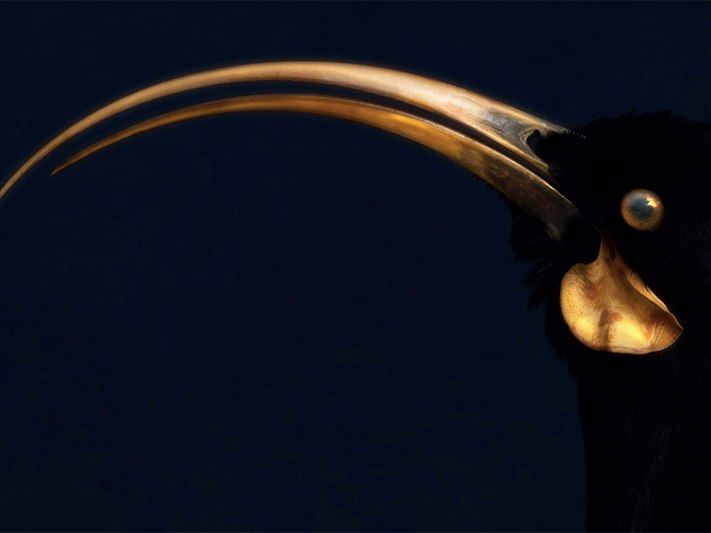
Meet the manu in Taharaki Skyside
Learn more about the native manu behind Fiona Pardington’s Taharaki Skyside. Each is unique, culturally and environmentally important, and many need our protection.
Free museum entry for New Zealanders and people living in New Zealand
Open every day 10am-6pm
(except Christmas Day)
Free museum entry for New Zealanders and people living in New Zealand
Hump Ridge Tomtit (M) by Digitaltrails (CC BY NC SA 2.0) via Flickr
South Island tomtit call (Source: Department of Conservation CC BY 4.0)
Native forests, scrublands, and exotic pine plantations
Not Threatened
(Chatham Island subspecies is Threatened – Nationally Endangered)
Vulnerable to introduced predators.
Kōmiromiro (or miromiro) are very observant birds, able to spot food from 10m away. They often forage by perching and observing on a branch before darting in to catch their insect prey.
Miromiro are sexually dimorphic, meaning the sexes look different. Males are usually black and the females are brown, both with a white or light-coloured underbelly and a tiny white moustache (note the kōmiromiro in the Taharaki Skyside is an unusual colour morph).
The sharp-eyed miromiro is often referred to in te ao Māori as a scout and messenger, and an observant person is said to have ‘he kanohi kōmiromiro’ or ‘karu miromiro’ (the eye of a tomtit), referring to the careful way the bird looks for small insects.
‘Miro’ means to twist, twirl, or spin rapidly – a nod to the quickness and agility of these manu.
Learn more about the native manu behind Fiona Pardington’s Taharaki Skyside. Each is unique, culturally and environmentally important, and many need our protection.
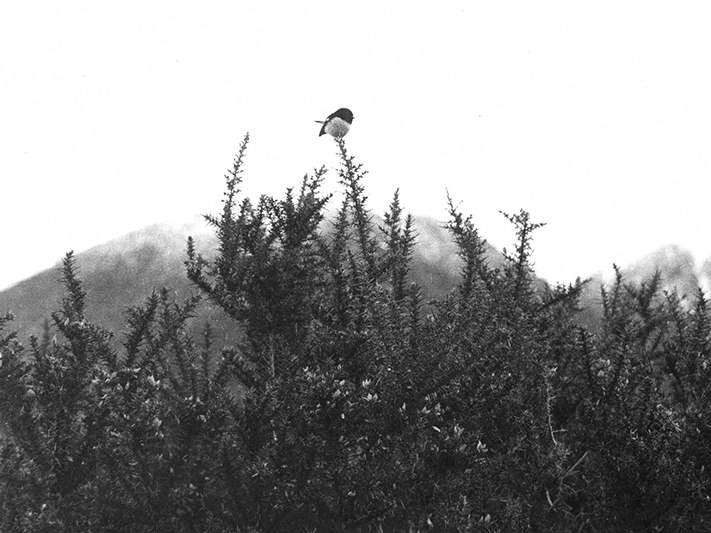
Find photographs of these tiny birds, representation in paintings, and examples of the miromiro weaving method in taonga Māori poi on Collections Online.
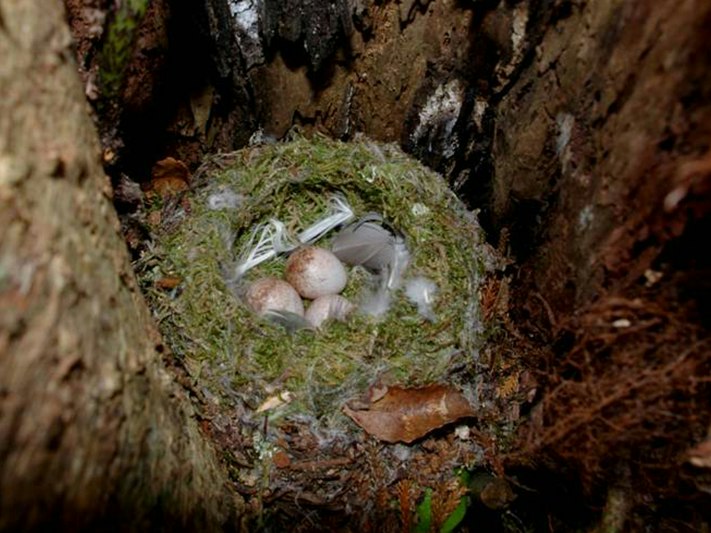
A small songbird with a large head and small black tail in which adult males have a black head, upper breast and back, black wings with a white bar, and white underparts, while females are similar but with duller black areas. Kōmiromiro have a widespread distribution through the North and South Islands, and occur on some of their offshore islands, Stewart Island, Chatham Islands, Snares Islands and Auckland Islands.
This link will take you to NZ Birds Online website.