







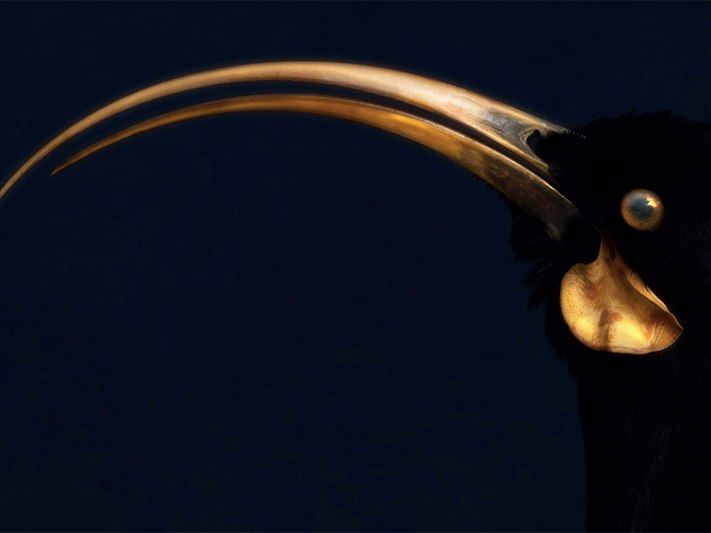
Meet the manu in Taharaki Skyside
Learn more about the native manu behind Fiona Pardington’s Taharaki Skyside. Each is unique, culturally and environmentally important, and many need our protection.
Free museum entry for New Zealanders and people living in New Zealand
Open every day 10am-6pm
(except Christmas Day)
Free museum entry for New Zealanders and people living in New Zealand
Kororā Little penguin. Bird study field trip Lady Alice Island Mauimua December 2012, 2012. Photo by Jean-Claude Stahl. Te Papa (157237)
Listen to the kororā on NZ Birds Online.
Kororā nest close to the sea in crevices and burrows. You can build a kororā nest box at home to give them a safe place to live!
Vulnerable to introduced predators, fishing net entanglement, car strike
Also known as the little blue penguin, fairy penguin, and white-flippered penguin, kororā are the world's smallest penguin – up to 25cm tall and weighing just 1kg!
Kororā are nocturnal and return to land at dusk. They meet up in small groups, called ‘rafts’ in the evening and come into shore together. The same individuals meet up to form a raft each night.
He kororā, he tohu ōranga
The little penguin is the sign of life.
This whakataukī speaks to the kororā as an indicator of their habitat's health. If the coastal and marine health is poor, kororā will be scarce.
Learn more about the native manu behind Fiona Pardington’s Taharaki Skyside. Each is unique, culturally and environmentally important, and many need our protection.
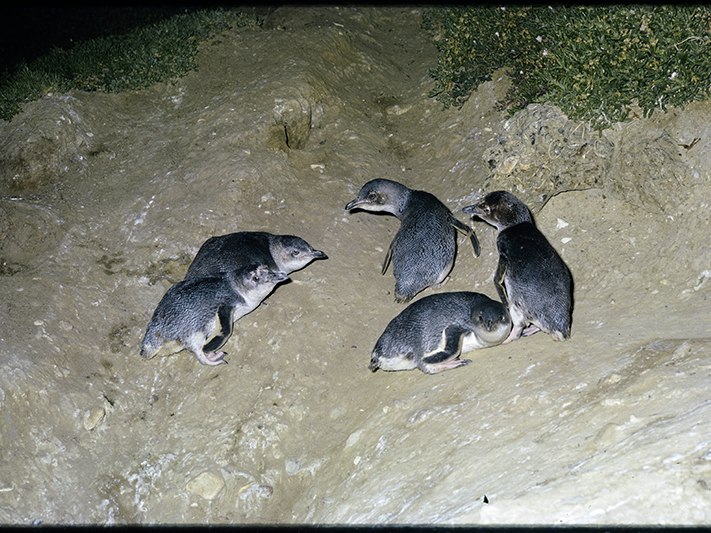
Blue penguins are the smallest penguins in the world. These little guys weigh about one kilogram. Compare that with the biggest emperor penguins – weighing in at some thirty kilograms! From August to March you will find them nesting in holes and crevices among the rocks and driftwood on the rocky coasts of the North, South, and Stewart Islands, and on hundreds of smaller offshore islands.
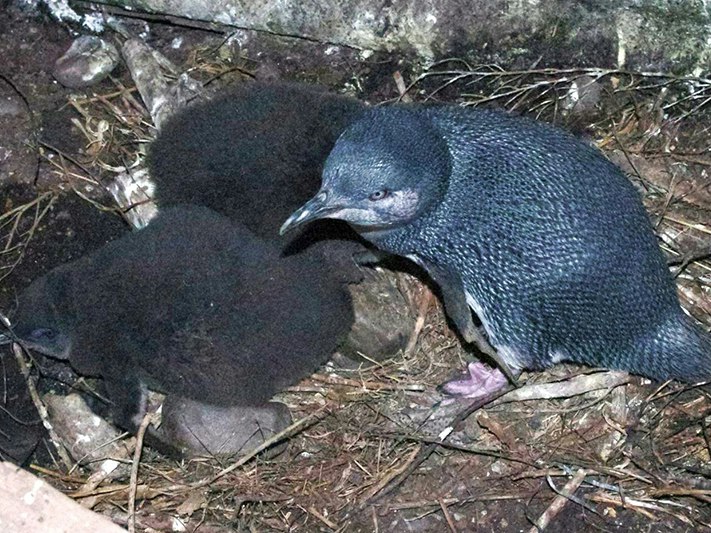
A small, stocky, dark blue and white penguin with a long, robust, dark hooked bill, blue-grey eyes, relatively short flipper-like wings, and pinkish-white legs and feet. Its main call at nesting sites is a loud bray ending in an inhalant squeal; also deep growls. A contact ’bark’ is given at sea.
This link will take you to NZ Birds Online website.