







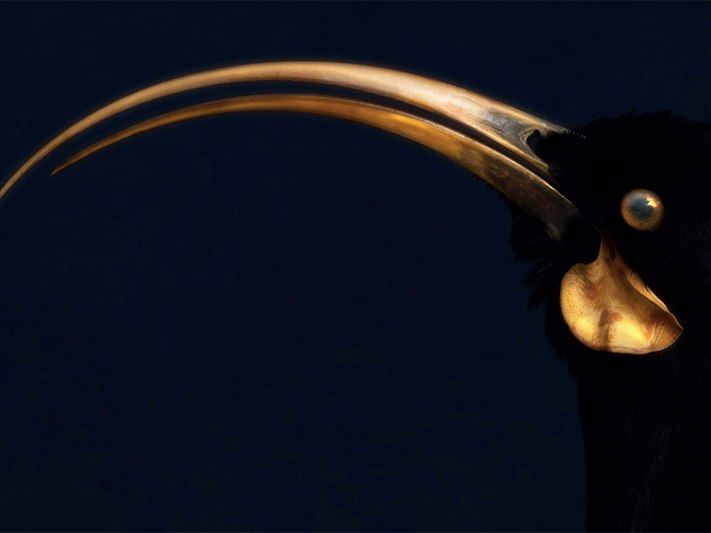
Meet the manu in Taharaki Skyside
Learn more about the native manu behind Fiona Pardington’s Taharaki Skyside. Each is unique, culturally and environmentally important, and many need our protection.
Free museum entry for New Zealanders and people living in New Zealand
Open every day 10am-6pm
(except Christmas Day)
Free museum entry for New Zealanders and people living in New Zealand
Toroa | Southern Royal albatross, Catseye Bay to Bligh Sound, 2020. Photo by Jean-Claude Stahl. Te Papa (166365)
To be found
Toroa spend 85% of their lives at sea, soaring around the globe at the latitude of Aotearoa
Threatened – Nationally Vulnerable
Vulnerable to habitat loss, capture in fishing nets (bycatch), climate change.
The toroa is the largest living New Zealand native bird, with a wingspan of over three metres! This enables them to soar without flapping their wings.
Despite being masters of the air, toroa have a hard time getting up there once on the ground. They need quite the run-up, and ideally some help from the wind, to get airborne.
Toroa consume sea water when they feed. They remove the excess salt from their system through a salt gland above each eye. The salty ‘tears’ then drain along their bill.
Roimata toroa, or albatross tears, are depicted in woven tukutuku patterns on the walls of some meeting houses.
The grace and elegance of the flying toroa are qualities highlighted in the two following whakataukī:
Me te toroa e tau ana i runga i te au
Like the albatross nestled upon the current
Me he toroa ngunungunu
Like a toroa nestling its head under its wing
Learn more about the native manu behind Fiona Pardington’s Taharaki Skyside. Each is unique, culturally and environmentally important, and many need our protection.
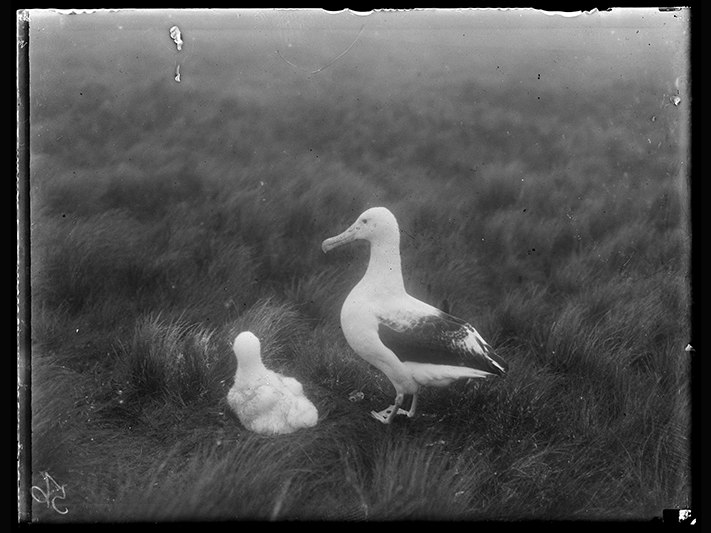
Find out about the Toroa (both the Southern and Northern royal albatross) on Collections Online including bird specimens, eggs, photography, and taonga (treasures) made using the toroa bone.
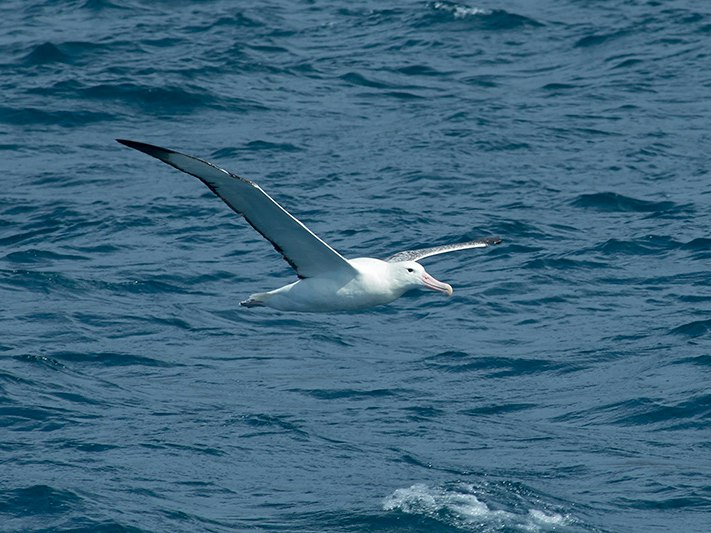
A large white-bodied albatross with black wings and a robust light pink bill with a creamy tip and a black cutting edge to the upper mandible.
This link will take you to NZ Birds Online website.