Gallipoli: The Scale of Our WarKaripori: Te pakanga nui
Te Papa has joined forces with Wētā Workshop to create an exhibition like no other. This ground-breaking exhibition tells the story of the Gallipoli campaign in World War I through the eyes and words of eight ordinary New Zealanders who found themselves in extraordinary circumstances.
Wheelchair accessible (exhibition space includes two ramps).
Contains graphic content and realistic sound.
Variable lighting and some small spaces.
Photography permitted. No flash.
Please keep phones on silent.
This exhibition explores the experiences of real New Zealanders on Gallipoli through their own words and images. Certain content may disturb some visitors. Adults, please supervise your children.
Gallipoli: The Scale of Our War combines the world of museums with the world-class creative artistry of Wētā Workshop to immerse you in the eight-month Gallipoli campaign.
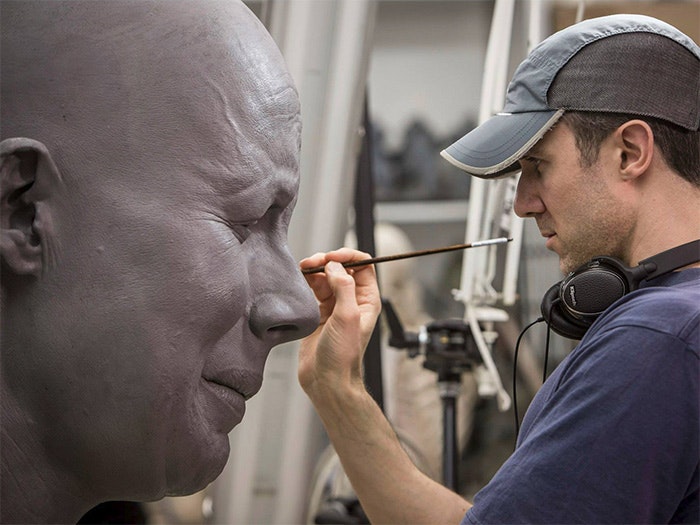
The ground-breaking exhibition tells the story through the eyes and words of eight ordinary New Zealanders who found themselves in extraordinary circumstances. Each is captured frozen in a moment of time on a monumental scale – 2.4 times human size.
The giant sculptures took a staggering 24,000 hours to create, and countless hours were spent researching their rich histories.
Cutting-edge technology was also used to create 3-D maps and projections, miniatures, models, dioramas, and a range of interactive experiences that bring New Zealand’s Gallipoli story to life.
In total, 2,779 Kiwis lost their lives on Gallipoli, and many others were scarred forever. Gallipoli: The Scale of Our War takes you to the core of this defining event.
Take a powerful one-hour journey through Te Papa’s Gallipoli exhibition. Guided storytelling and Wētā Workshop’s artistry bring to life the real experiences of New Zealanders in a defining moment of history.
Read blogs about behind-the-scenes work that goes into this exhibition, research into people and places, and direct connections with people in Aotearoa New Zealand.
In 1918, the New Zealand army commissioned photographs of servicemen who had lost limbs during the war. This was part of a government scheme to show that these men were still competent and employable.
ANZAC refers to the soldiers from Aotearoa New Zealand and Australia who served in the Australian and New Zealand Army Corps (ANZAC) during the First World War. Anzac Day is held annually on April 25 as a national day of remembrance to commemorate those who served and those who died in all international wars, conflicts, and peacekeeping operations.